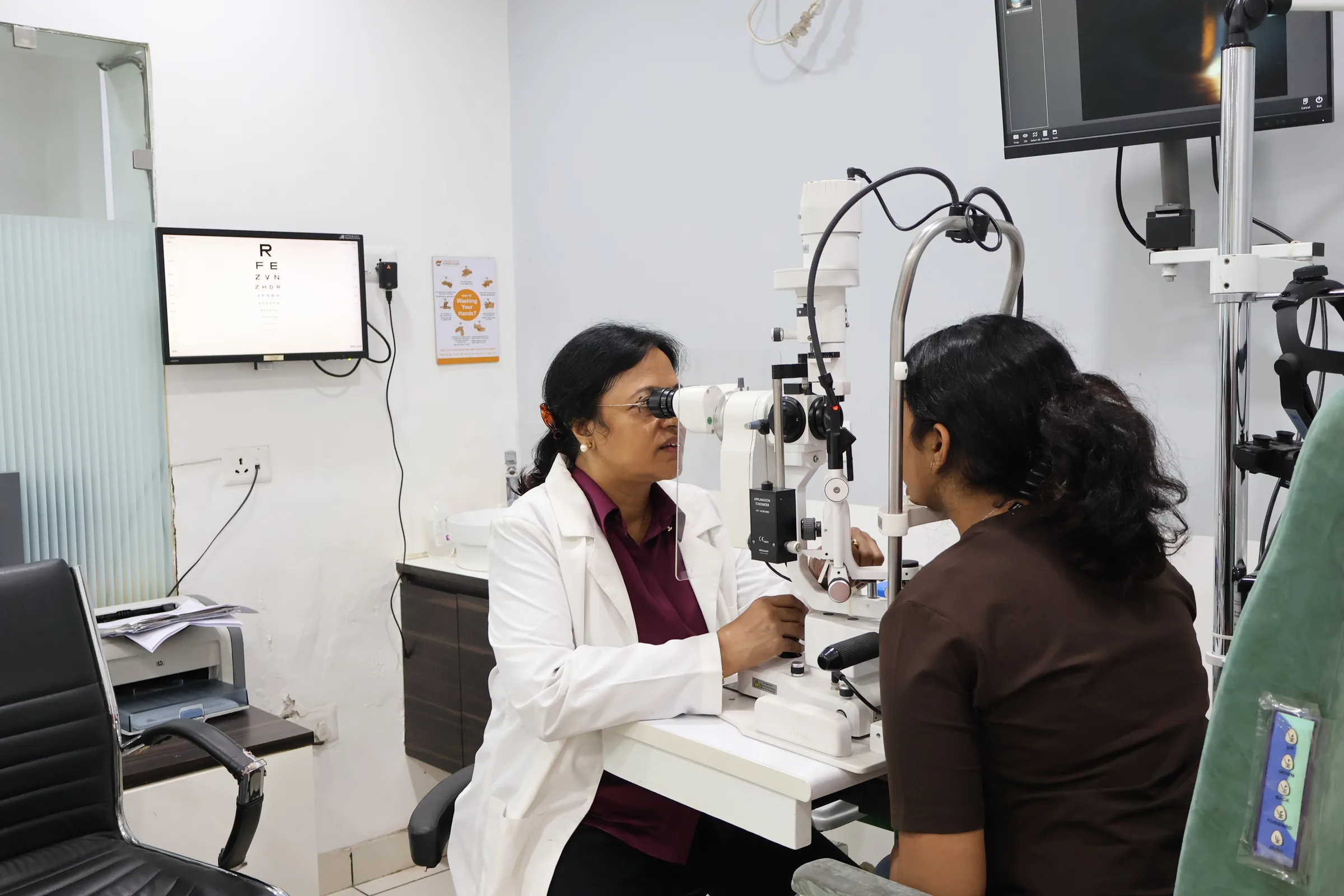
Cataract SurgeryA slit-lamp examination in a consultation room at the centre.
Comprehensive Vision Care
What is a cataract?
A cataract is a clouding of the eye's natural lens. It usually develops slowly, and it is one of the common reasons that vision becomes blurred or dim as people get older.
Age-related changes are the most common cause. Cataracts can also be associated with an eye injury, some long-term medicines such as steroids, diabetes or other eye conditions. They can affect one or both eyes, and symptoms may be different in each eye.
Cataract surgery removes the clouded lens and, in most cases, replaces it with a clear artificial lens, called an intraocular lens (IOL). Not everyone with a cataract needs surgery straight away. The decision depends on how much your vision affects your daily life and on what the examination shows.
A surgical console in the theatre area at the centre.
See it explained
A normal eye and an eye with a cataract
The same view of the eye twice. The difference is the lens: clear in a normal eye, clouded in an eye with a cataract.
Normal eyeThe lens is clear, so light passes through and focuses on the retina.Eye with a cataractThe lens has become cloudy, so light is scattered and vision can look blurred or dim.
Illustration, not to scale. General information to help you understand an examination or a procedure; it is not a diagnosis, and your doctor explains what applies to your eyes.
See it explained
Clear lens and common cataract patterns
Compare a clear natural lens with a lens affected by a cataract, then see where three common patterns of clouding can develop. Your examination determines what applies to your eye.
Clear lens
Clear natural lens
Light passes through a transparent lens and focuses on the retina.
Clouded lens
Lens with a cataract
Clouding of the natural lens can scatter light and affect vision.
Three common patterns
These describe where clouding sits in the lens. A person can have more than one pattern.
Nuclear sclerotic
Nuclear sclerotic
Clouding develops in the central part of the natural lens.
Cortical
Cortical
Clouding begins in the outer lens and can extend towards its centre.
Posterior subcapsular
Posterior subcapsular
Clouding develops near the back surface of the lens.
Illustration, not to scale. General information to help you understand an examination or a procedure; it is not a diagnosis, and your doctor explains what applies to your eyes.
See it explained
How a clouded lens can change what you see
Drag across the picture to compare a clear view with an illustration of clouded vision.
Clear lensClouded lens (illustration)
Moderate Cataract
Clouding can make everyday tasks more difficult, especially in dim light or when facing bright lights.
≈More noticeable blur
◐Colours look less vivid
☼Glare from headlights
▤Reading needs brighter light
Illustration, not to scale. General information to help you understand an examination or a procedure; it is not a diagnosis, and your doctor explains what applies to your eyes.
Choosing a lens
About replacement lenses
Artificial lenses come in different designs. Monofocal lenses usually have one main focus; multifocal and extended depth of focus (EDOF) designs aim to cover more than one distance. Toric designs address astigmatism and may overlap with these categories.
Which design, if any, suits you depends on your eyes, your daily activities and your expectations. The doctor explains the choices and what each can and cannot do. No lens can promise that you will never need spectacles.
See it explained
Understanding replacement lens designs
Explore four design terms. They are general categories, not a list of implants confirmed to be available at this centre.
MultifocalMore than one focus
More than one focal distance
A multifocal design distributes light across more than one focus. It can involve visual trade-offs, which need an individual discussion.
Which design, if any, suits you depends on your eyes, your daily activities and your expectations. These simplified diagrams do not predict your vision. No lens can promise that you will never need spectacles.
Illustration, not to scale. General information to help you understand an examination or a procedure; it is not a diagnosis, and your doctor explains what applies to your eyes.
See it explained
Cataract surgery in 4 simple steps
A simple visual guide to what happens in cataract surgery, one step at a time.
1
Before
Clouded natural lens
The natural lens has become cloudy, so light does not focus as sharply on the retina and vision can look blurred, dull or hazy.
2
Small incision
A tiny opening is made
A very small opening is made at the edge of the cornea so the surgeon can reach the lens. Whether stitches are needed depends on the eye and on the technique the surgeon chooses.
3
Lens removed
The cloudy lens is taken out
The clouded lens is taken out of the eye.
4
New lens
A clear lens is placed
A clear artificial lens, called an intraocular lens (IOL), is placed where the natural lens was. Which design suits you is decided with your doctor.
Note: a general outline. Your doctor explains how the operation is arranged for you, and what to do before and afterwards.
Know the signs
When to have your eyes checked
Vision that looks cloudy, blurred or dim
Glare from bright light or oncoming headlights, especially at night
Trouble seeing in low light or at night
Halos around lights or double vision in one eye
Colours that look faded or yellowed
Spectacles that need changing again and again
Reading, driving or recognising faces becoming harder
Sudden loss of vision, a new eye injury, or severe eye pain needs urgent medical attention. Do not wait for a routine appointment.
What to expect
What an assessment involves
A general outline. The doctor decides which steps you need and explains each one.
01
Examination
Your vision and the health of your eyes are checked, including the lens.
02
Discussion
The doctor explains whether surgery is likely to help, what the options are and what the risks are.
03
Planning
If you decide to go ahead, measurements of the eye help plan the operation and choose a replacement lens. The doctor also explains any instructions about medicines, eye drops or contact lenses.
04
Surgery, if you choose it
The centre explains how the operation is arranged, the benefits and risks in your case, and what to do before and afterwards.
05
Follow-up
The doctor advises on prescribed eye drops, protecting the eye, returning to daily activities and follow-up checks. Contact the centre promptly if you have worsening pain, redness or a sudden change in vision.
Watch
Videos on this topic
Dr. Poonam Jain's centre shares short videos on its YouTube channel and in its own footage.
Videos are general information, not a substitute for an examination. They complement the written information on this page.
This page is general information, not medical advice. Your own eyes need to be examined before anyone can advise you.
Do cataracts need surgery straight away?
Not always. If a cataract is not troubling you, the doctor may suggest checking it from time to time. Surgery is considered when it affects what you need to do in daily life.
What is an intraocular lens (IOL)?
It is the clear artificial lens placed in the eye to replace the natural lens that has become cloudy. Different designs exist, and the doctor discusses which may suit you.
What does “stitchless” mean?
Modern cataract surgery is often done through a very small opening that may not need stitches. Whether stitches are needed depends on the eye and on the technique the surgeon chooses, and this is explained to you.
Is cataract surgery suitable for everyone?
Suitability is decided after an examination. Other eye conditions and general health can affect the plan, and every operation carries some risk, which the doctor goes through with you.
What happens after cataract surgery?
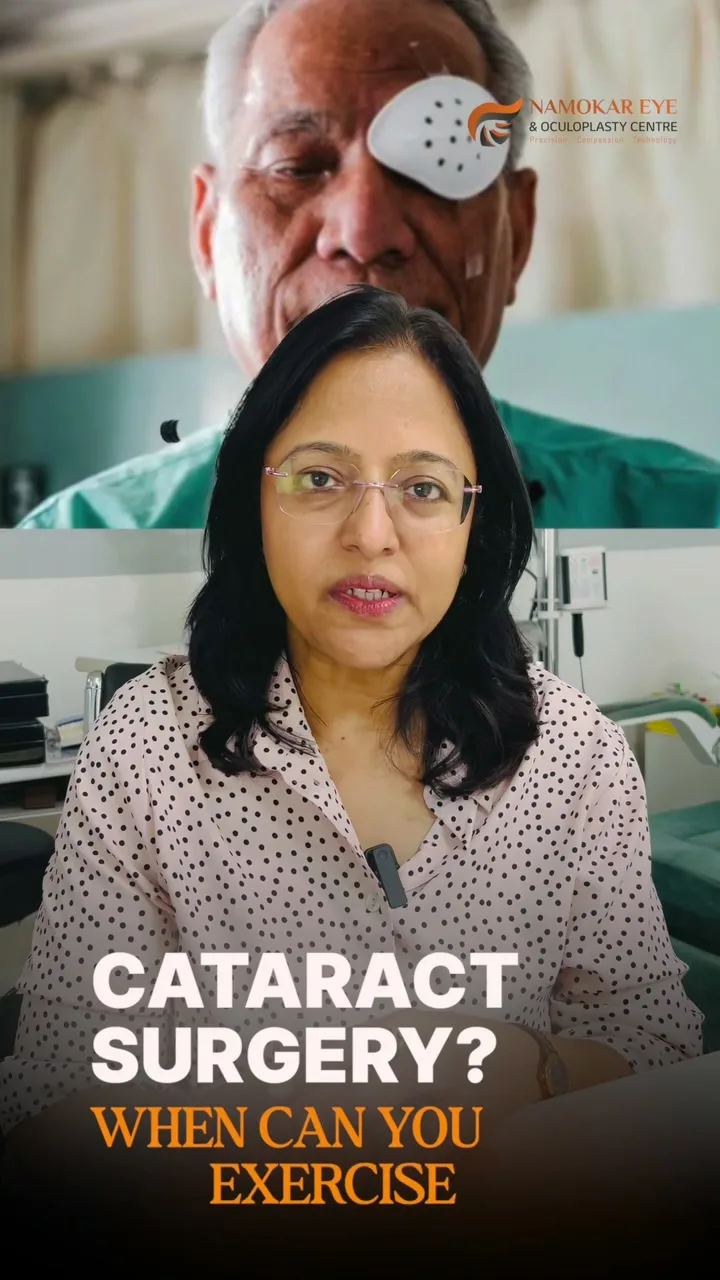
You are given individual instructions about eye drops, protecting the eye and follow-up. Vision can be blurred at first and improve over time. Do not rub the eye or restart driving, exercise or other activities until the doctor says it is appropriate for you.
Can a cataract come back after surgery?
The removed natural lens cannot develop another cataract. Some people later develop clouding of the capsule that holds the replacement lens. If this affects vision, the doctor can assess it and discuss treatment.
What should I bring to my first visit?
Previous prescriptions and eye reports, your current spectacles and a list of the medicines you take.